
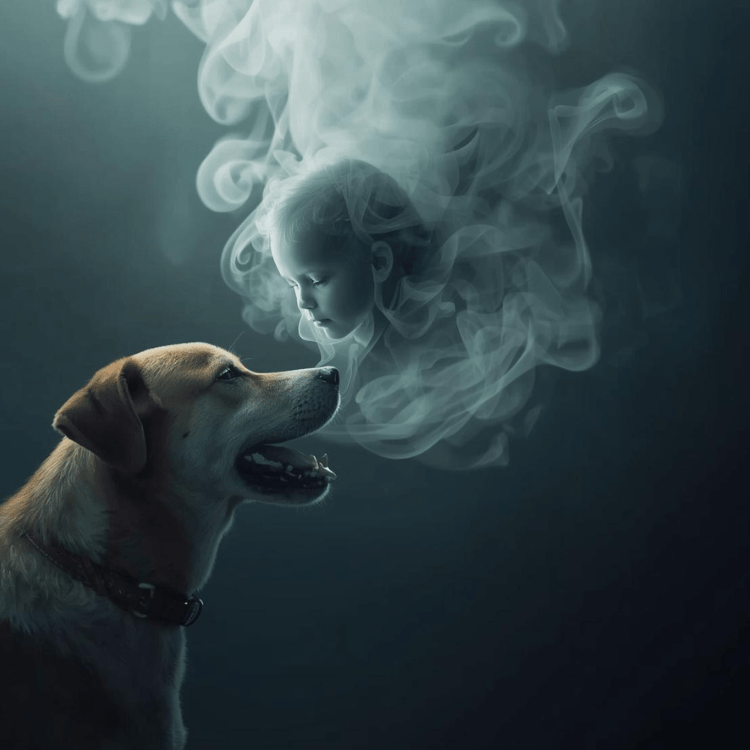
There are moments when the brain does something extraordinary—and unsettling. A face appears in fog. A figure forms in shadow. A voice seems to rise out of static. Science calls this pareidolia: the mind’s tendency to perceive meaningful patterns especially faces and voices, where none objectively exist.
I’ve experienced this myself, like watching my dog’s breath roll out into the night air and briefly seeing a shape form in the mist of a young child. I write about moments like that in my true paranormal experiences here on Haunted and Waiting, where readers are always welcome to share their own stories, but let’s move on.
Here’s the problem, some of the most famous ghost sightings and paranormal photographs fit pareidolia too well, yet not well enough to be dismissed. When perception, environment, memory, and expectation overlap, pareidolia becomes more than a trick of the brain. It becomes a threshold.
What Pareidolia Is (Scientifically)
Pareidolia is a well-documented neurological phenomenon rooted in survival. Our ancestors who recognized faces and voices fastest were more likely to survive and they passed that wiring on. The brain’s face-recognition systems activate with minimal data, automatically filling gaps when sensory input is unclear. Low light, stress, fatigue, and expectation amplify the effect.
This explains faces in clouds, figures in shadows, and shapes in fog—but pareidolia doesn’t stop at clouds or burnt toast. It appears constantly in haunted locations and ghost encounters.
Visual Pareidolia in Ghost Sightings
One of the most famous examples is the Brown Lady of Raynham Hall (1936). The photograph shows a translucent figure descending a staircase, long dismissed as shadow alignment or exposure issues. Yet witnesses had described the same apparition decades earlier, often carrying a lantern down those stairs.
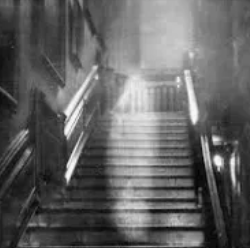
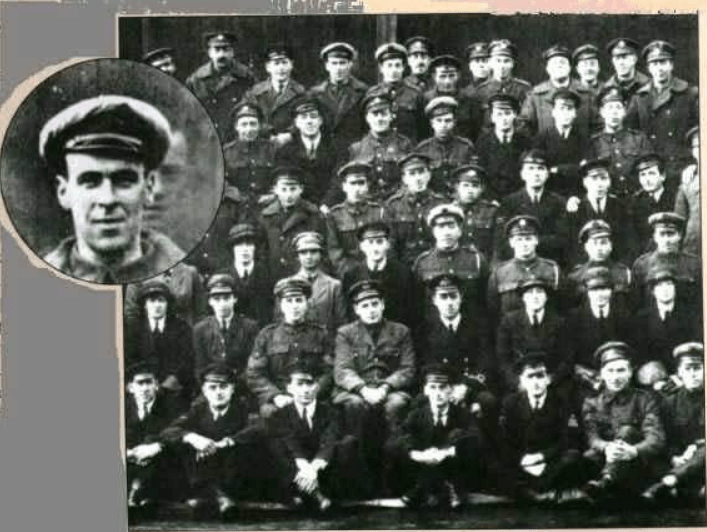
Pareidolia explains recognition. It does not explain why so many people recognized the same figure, in the same place, for generations, an idea I explore further in this post on recurring ghost apparitions. Another famous case is the Freddy Jackson Squadron Photograph (1919), where a deceased mechanic’s face appears in a group photo days after his death. Multiple men recognized him instantly. Pareidolia can explain seeing a face—but it struggles to explain recognizing a specific one, something I discuss more deeply in ghost photographs that resist debunking.
Auditory Pareidolia & Phantom Voices
Auditory pareidolia occurs when the brain finds speech in random noise—wind, echoes, static. This explains why people hear words in white noise or EVPs. But science falters when voices are heard by multiple people, repeat across recordings, or seem responsive.
Mirrors, Windows, and Reflective Triggers (Scrying)
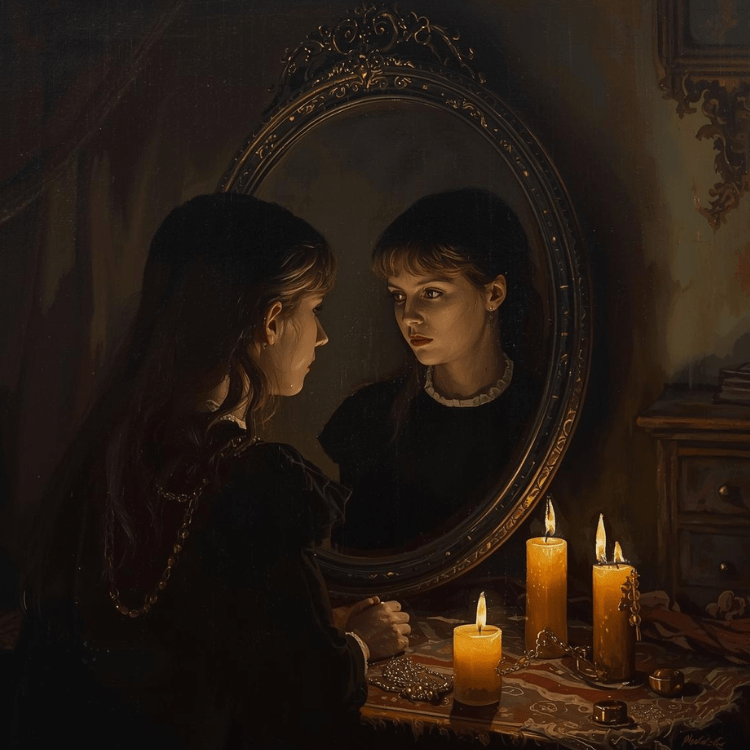
Mirrors are among the strongest pareidolia amplifiers. In low light, the brain struggles to anchor reflections, producing distortions sometimes called the strange-face illusion. This matters because mirrors appear constantly in ghost reports , historically and today.
This phenomenon connects directly to scrying and reflective hauntings, where mirrors, windows, and dark glass repeatedly act as focal points for apparitions.
At Borley Rectory, witnesses reported figures appearing in mirrors and windows for decades. Critics cite expectation, but reports include movement, repetition, and multiple witnesses. I’ll be linking the full Borley story in this deep dive on England’s most haunted house.
Palpatory (Tactile) Pareidolia: When You’re Touched
Not all hauntings are seen or heard. Palpatory pareidolia refers to interpreting ambiguous bodily sensations as external touch—hands brushing past, pressure on the skin, or sudden cold. Cold spots and unseen touch were reported centuries before modern heating systems.
These sensations appear repeatedly in historic hauntings as phantom touch and cold spots.
The Scientific–Haunted Overlap
This is where science and haunting meet.
Pareidolia explains why faces and voices are noticed first and how the brain fills gaps under uncertainty. What it does not explain is consistency, how people with no prior knowledge describe the same figures, movements, or names in the same locations.In serious paranormal research, pareidolia is not a dismissal. It’s a baseline. When experiences exceed it, something remains unexplained.
The Unsettling Conclusion
Pareidolia is not evidence of ghosts.
But it may be the mechanism that allows perception to cross a threshold.
It softens the brain’s filters.
It invites meaning into ambiguity.
It opens the door.
If ghosts are real, pareidolia may be how we notice them. If they aren’t, then humanity has independently seen the same faces, heard the same voices, and described the same shadows for centuries without coordination.
Either explanation is unsettling.
And if you want to keep exploring that thin place between science and haunting, you can start by subscribing to this blog :Haunted and Waiting — true paranormal experiences and reader stories.
For an Audio version of this BLOG, follow me on the Haunted and Waiting PODCAST on the EYE OPENER SOCIETY!

 Haunted and Waiting
Leave a comment